Projects / ShippedPrism × FilAm Sports · 2026
PH Combine
A public athlete platform and an offline field-entry system, built for Philippine flag football on the road to LA 2028.
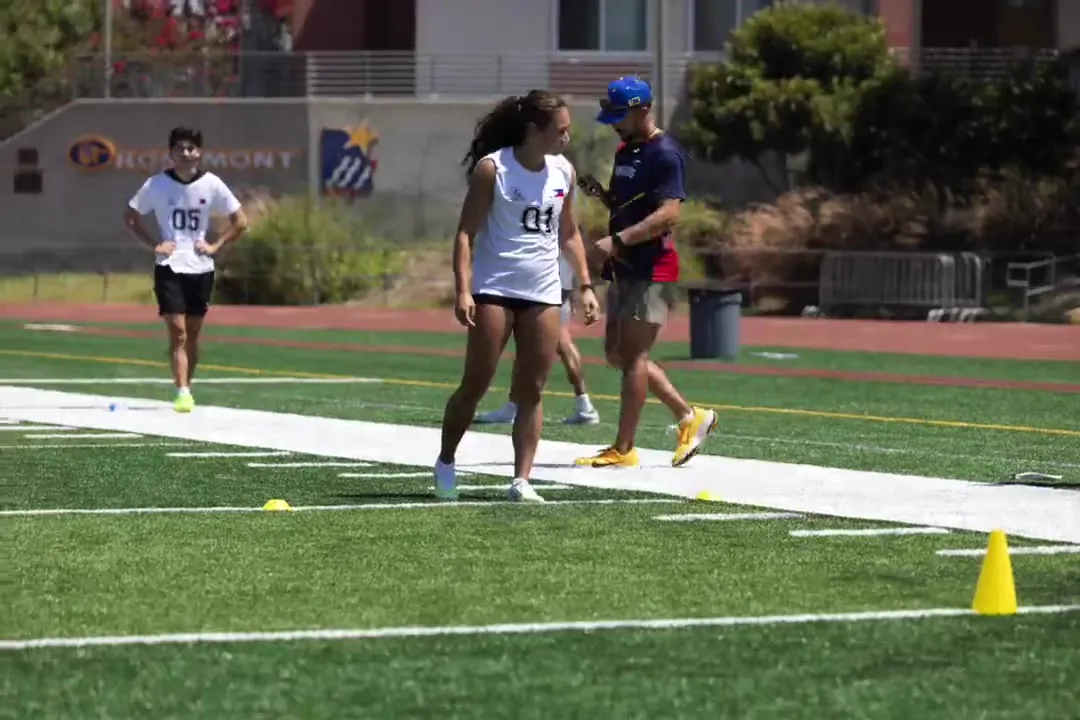
- Athletes testedSan Diego 2026
- 66
- Valid attemptsAcross 5 stations
- 621
- Playable clipsStation video
- 502
- Standard testsSame for everyone
- 5
- Production appsPublic + field
- 2
01Origin · San Diego 2026
Built from a 100°F field.
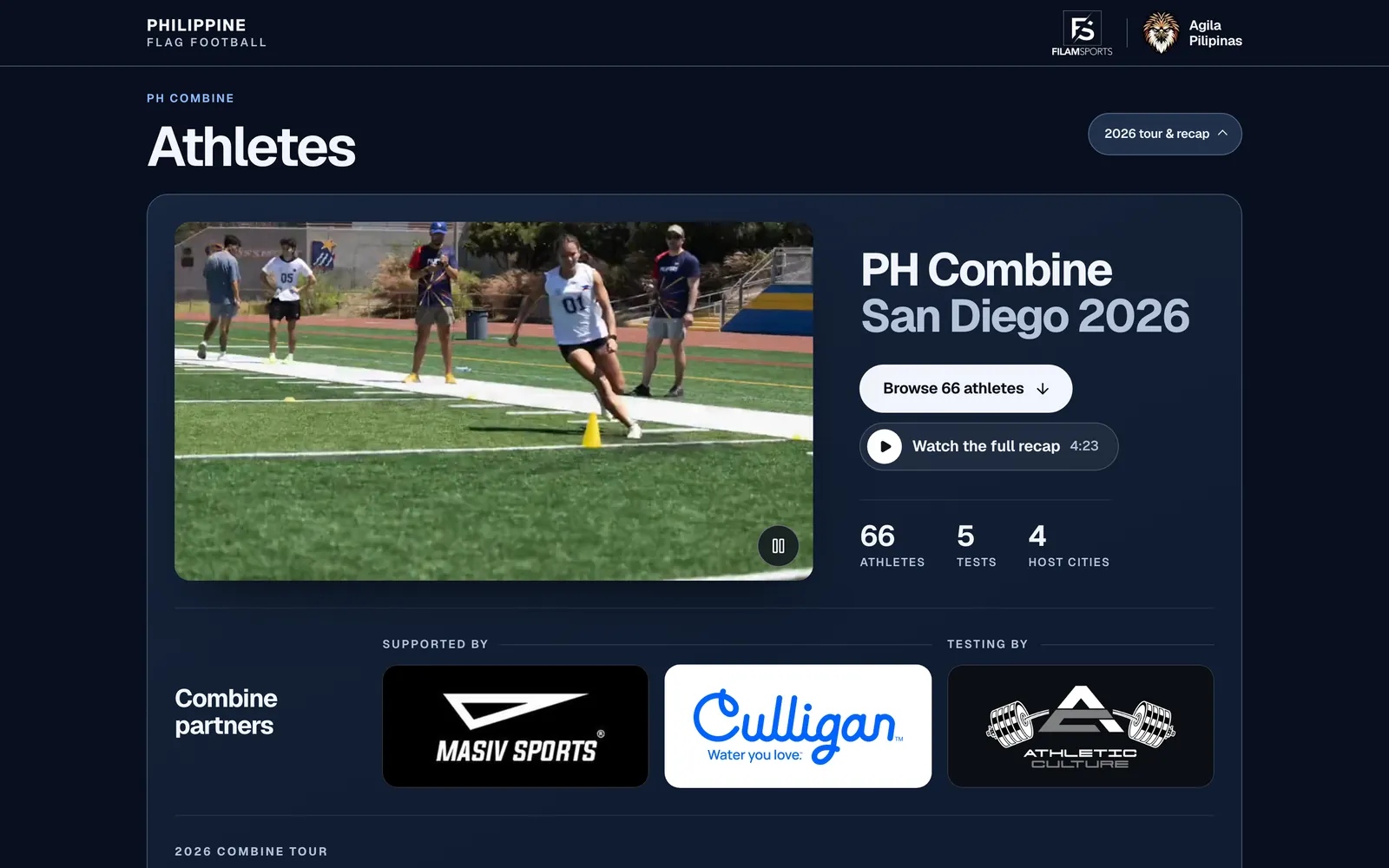
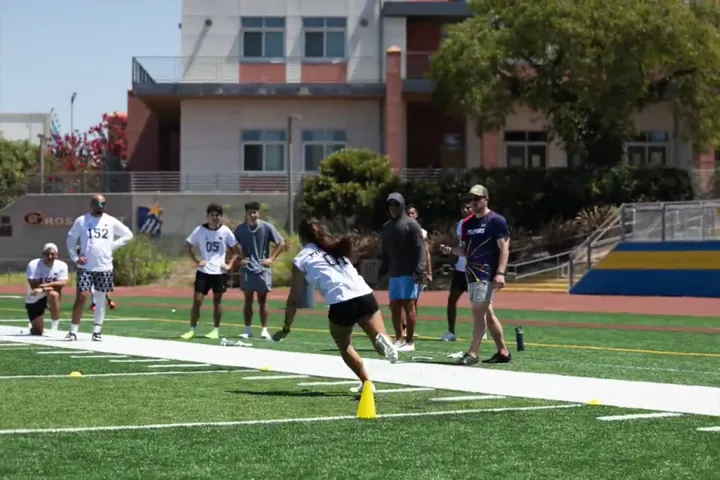
Flag football enters the Olympic Games in Los Angeles in 2028. To find Filipino and Filipino-heritage athletes across the diaspora and back home, Coach Edward Lasquete and FilAm Sports teamed up with Agila Pilipinas (the Philippine flag football governing body) and testing partner Athletic Culture to run an inaugural combine at Grossmont High School in San Diego.
Athletes flew in from across California, Hawaii, Australia and New Zealand, across U14, U16, U18 and Open divisions. The talent showed up immediately. The tooling didn’t exist yet: spreadsheets with missing cells, GoPros overheating in 100-degree heat, hand-timed stations where a 33.9-inch jump on video got typed as 33 inches, thousands of unsorted photos, and hours of continuous station footage.
We set out to fix both halves: a public web app where coaches and families can inspect verified numbers and clips without friction, and a separate mobile field-entry system that holds up in bright sun and weak venue signal without ever corrupting live records.
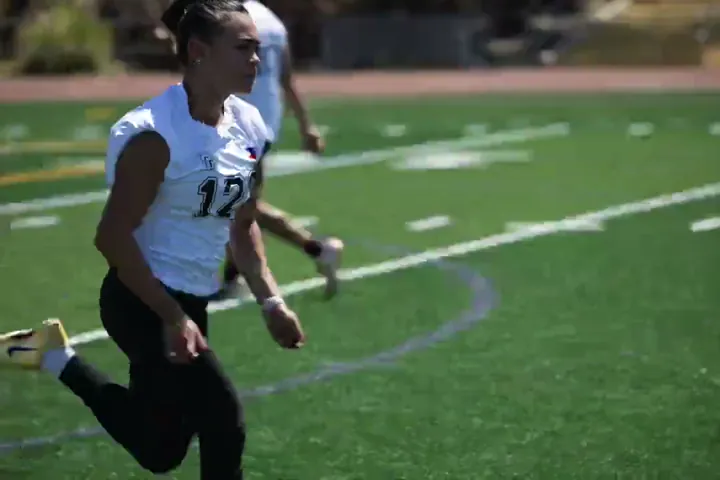
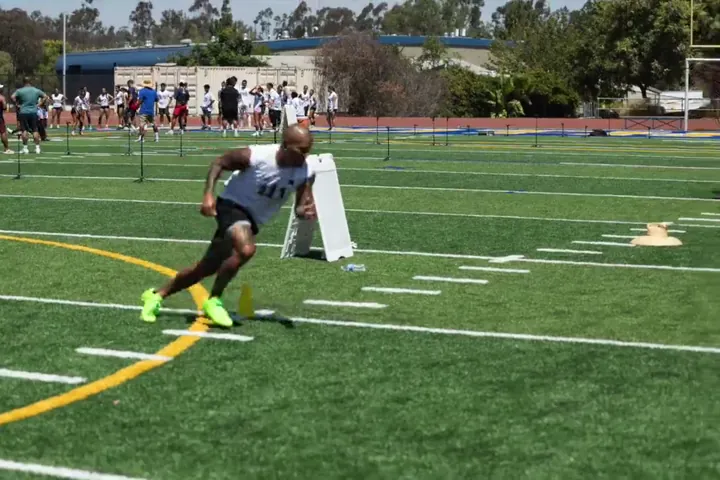
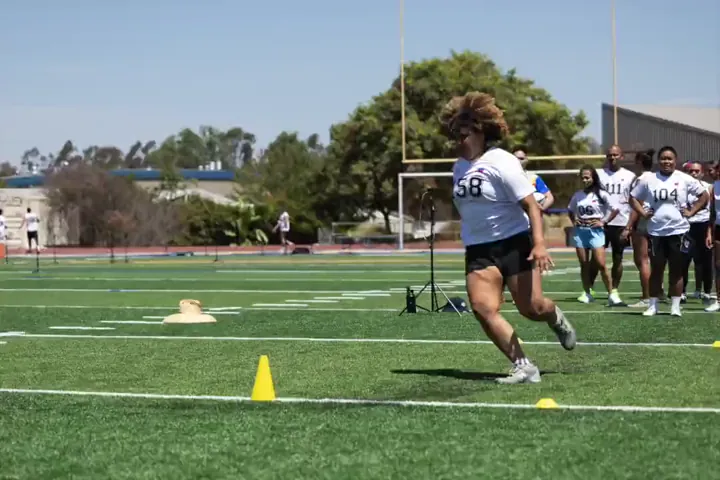
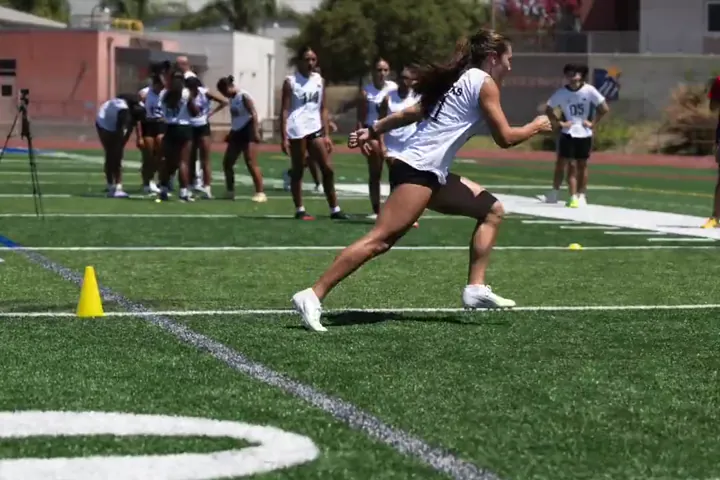
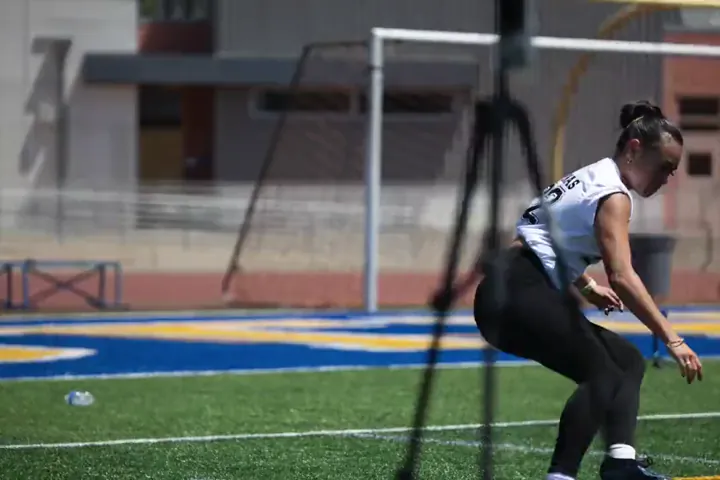
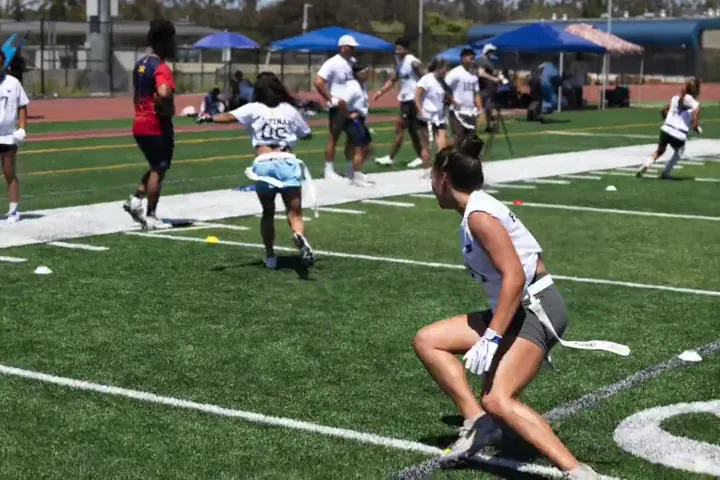
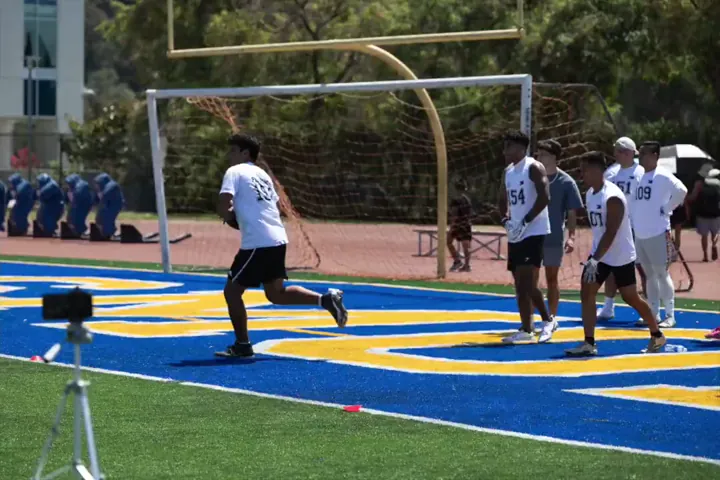
Stills from the San Diego recap film · hover to bring the colour back
02Measurement protocol
Five tests, zero rankings.
Every athlete runs the same five stations under one jersey number. Each result is explained in plain language and shown against the athlete’s peer group, never as a place on a leaderboard.
- 01ft · in
Broad jump
Standing horizontal distance across two attempts: a direct read on lower-body power.
Higher is better
- 020.1 in
Vertical jump
Leap height above standing reach, to a tenth of an inch.
Higher is better
- 0310 · 20 · 30 yd
30-yard sprint
Straight-line acceleration, with cumulative 10, 20 and 30-yard splits kept from one valid run.
Lower is better
- 045–10–5 s
Pro shuttle
Lateral burst, deceleration and change of direction across a ten-yard box.
Lower is better
- 053-cone s
L-drill
Tight-angle agility, hip fluidity and acceleration out of sharp breaks.
Lower is better
Anatomy of a result
One tile, six decisions.
Early drafts had rankings and generated scouting blurbs. Working with Coach Ed, we cut both. What stayed is everything a coach needs to trust a number.
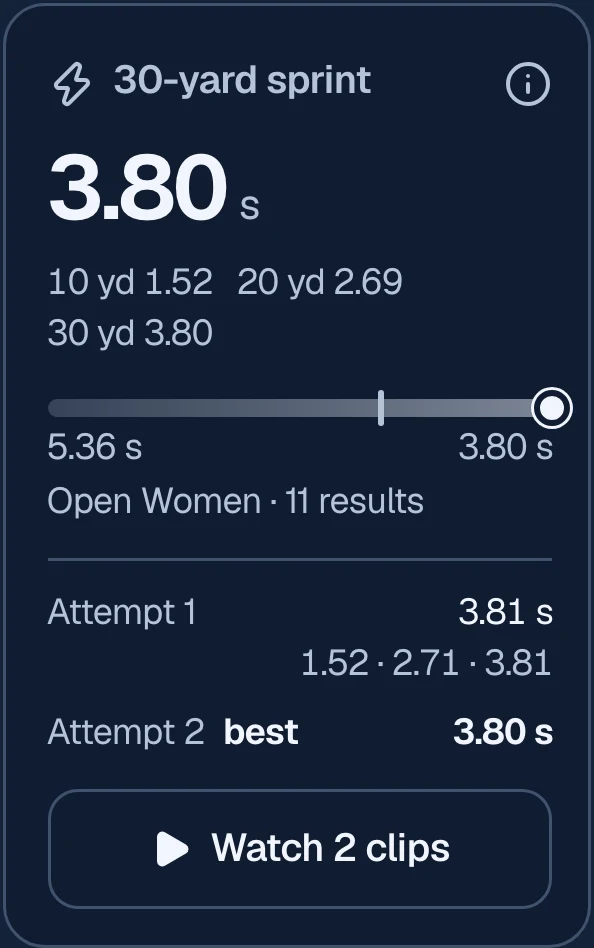
- The best mark, first. Best of two attempts, set large. Units stay in the athlete’s language: seconds, inches, feet and inches.
- Splits from one run. Cumulative 10, 20 and 30-yard times, kept together from a single valid attempt.
- Range, not rank. The bar spans the athlete’s peer group, worst to best. The tick is the group’s middle result. No number one.
- Group and sample size. Which group the bar describes, and how many results it holds.
- Both attempts kept. Every recorded attempt stays visible, with the best one marked.
- The raw clips. Station video for the attempts, one tap away.
Design restraint
Context without leaderboards or AI fluff
A single combine isn’t a global ranking, and coaches immediately distrust synthetic prose. So every result sits on a peer-group range bar beside real coach observations and raw attempt video, and sorting across all groups asks you to pick a group first.
Beyond raw numbers
Football skills, kept apart from tests
Times and jumps tell half the story. Profiles keep measured combine attempts separate from route-running and receiving sessions (out, slant, go, hitch, quick out), with their own dates, captions and thumbnails, all editable by staff with full audit history.
03Product tour · Recorded on phcombine.com
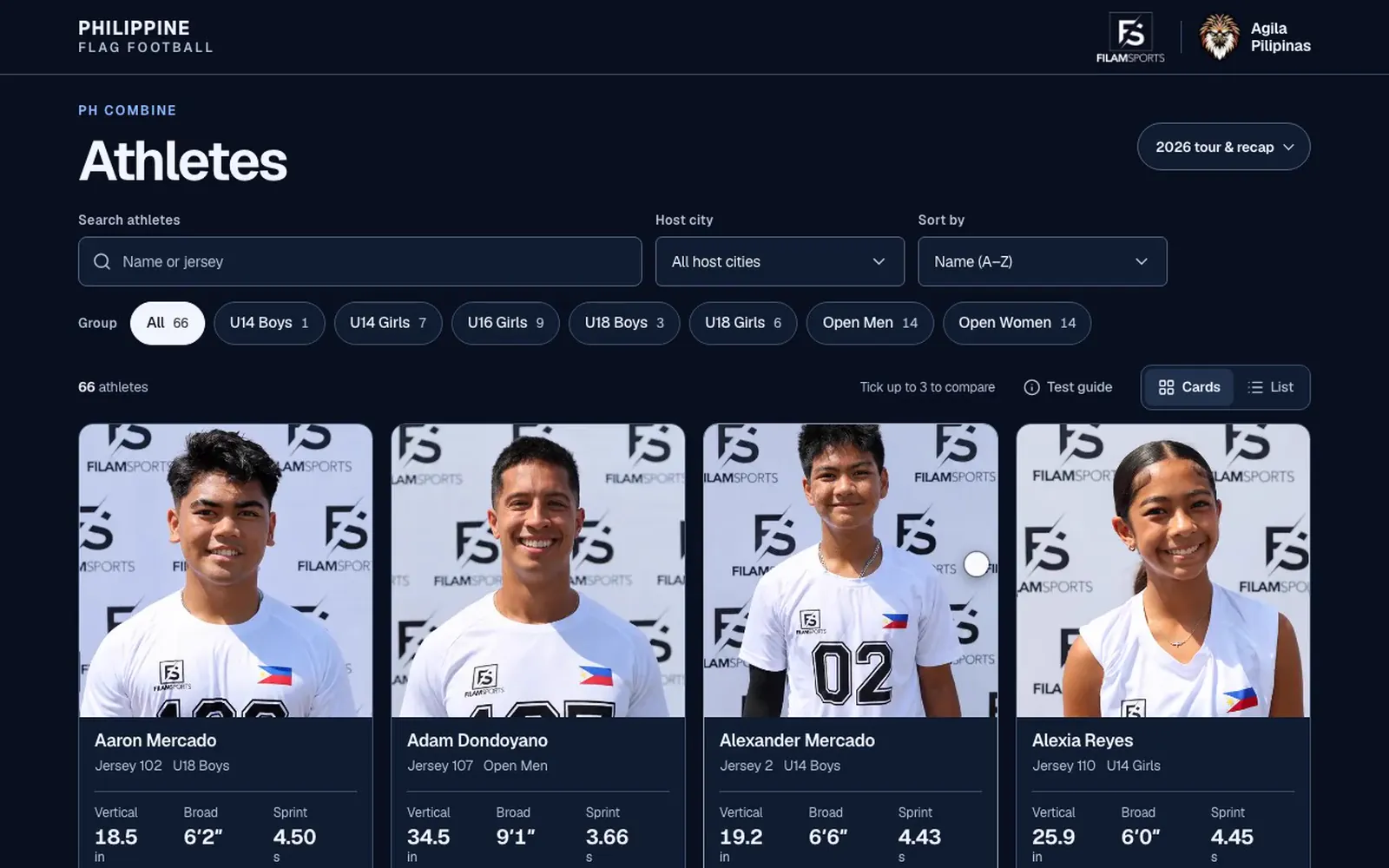
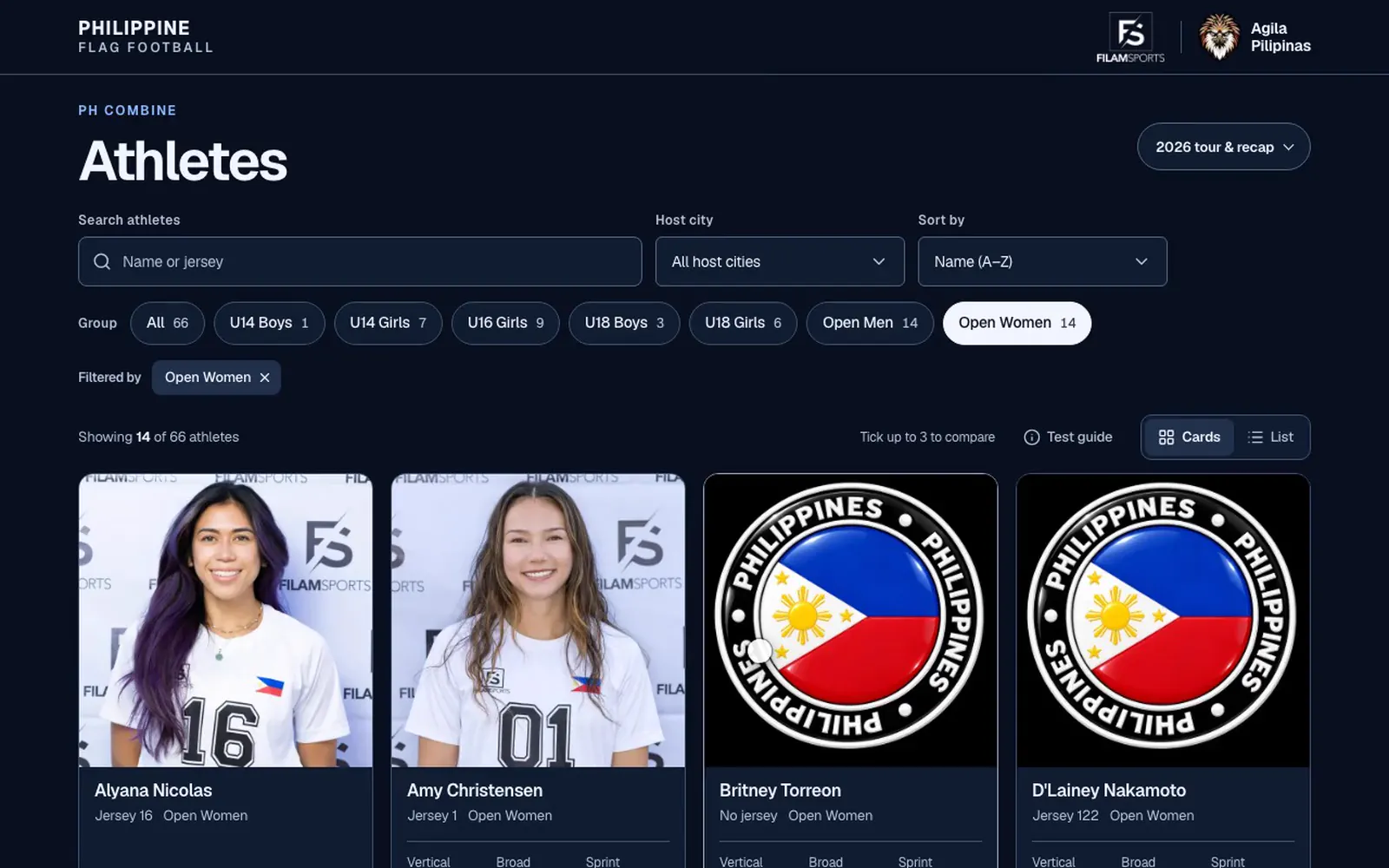
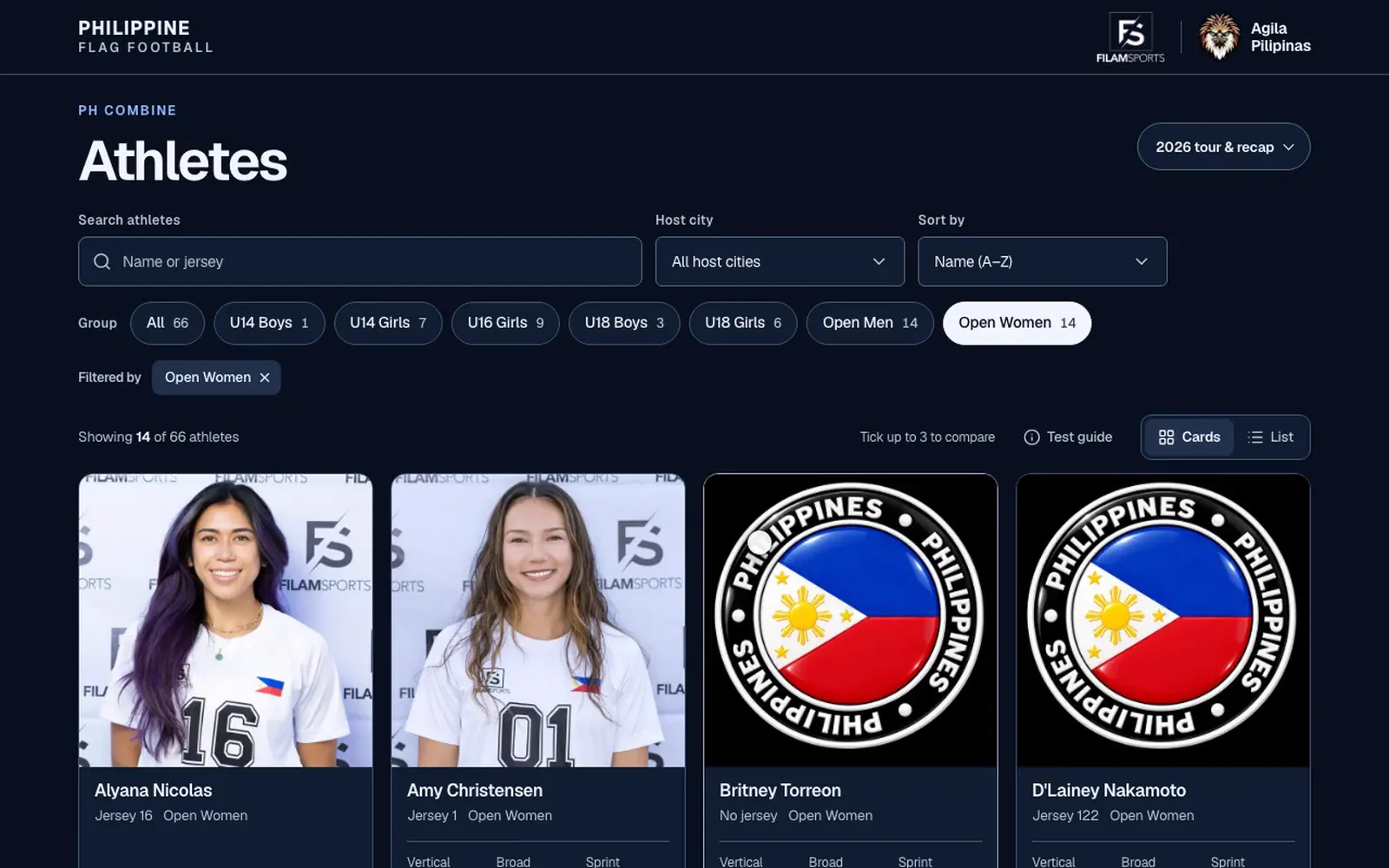
Inside the athlete record.
Photo-first cards pull you in; profiles and side-by-side comparisons let a coach evaluate a group on a phone, an iPad or a laptop. Every frame below is the live product.
Built for the sideline
Phone first, because coaches are standing up.
Most people open a profile from a shared link on a phone. On small screens the directory gets a filters sheet, the profile leads with results, and the athletes start on the first screen.
- 44 pxMinimum touch target
- 12 pxSmallest text, anywhere
- 0Logins to view a profile
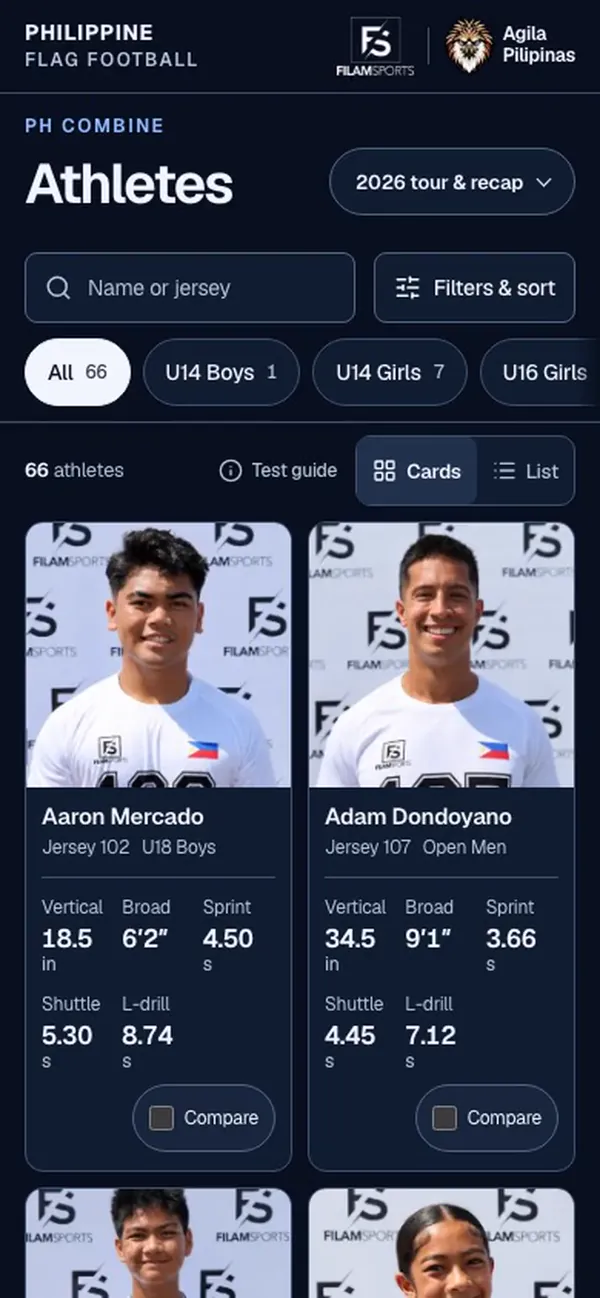
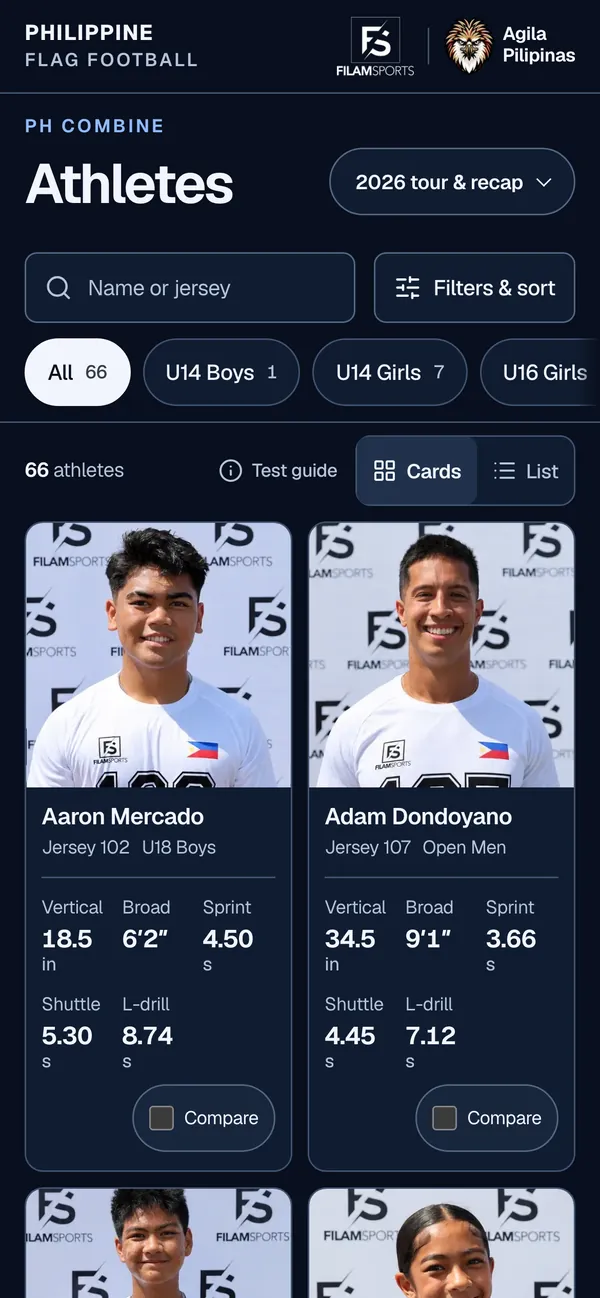
01 · Directory, first screen 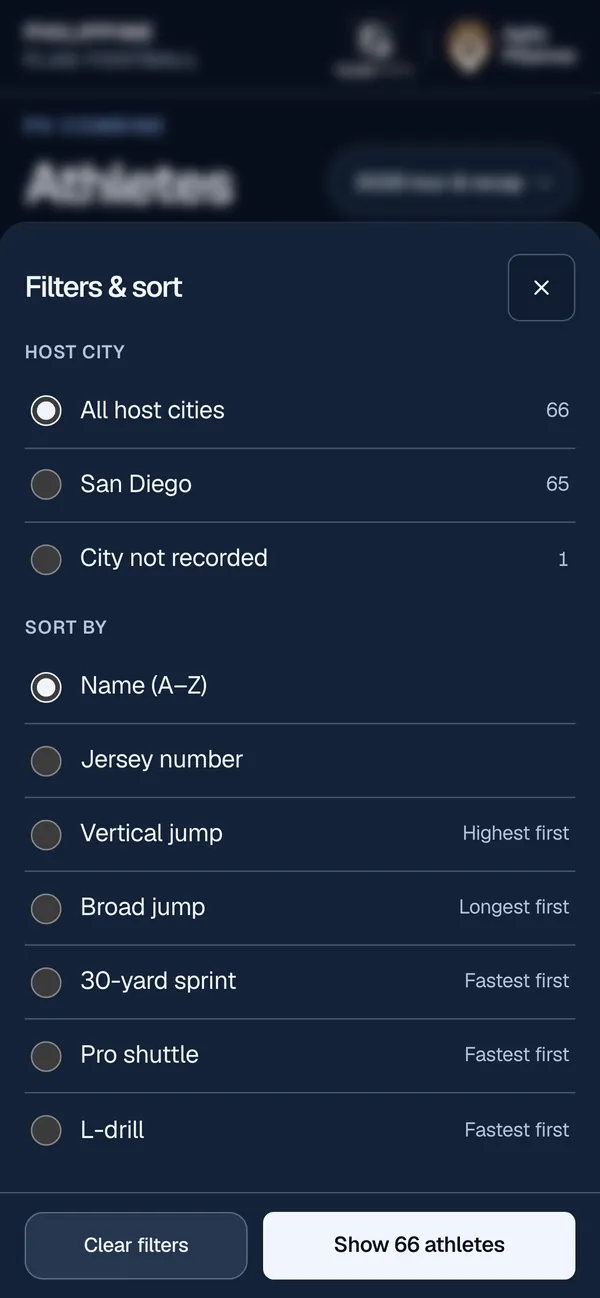
02 · Filters & sort sheet 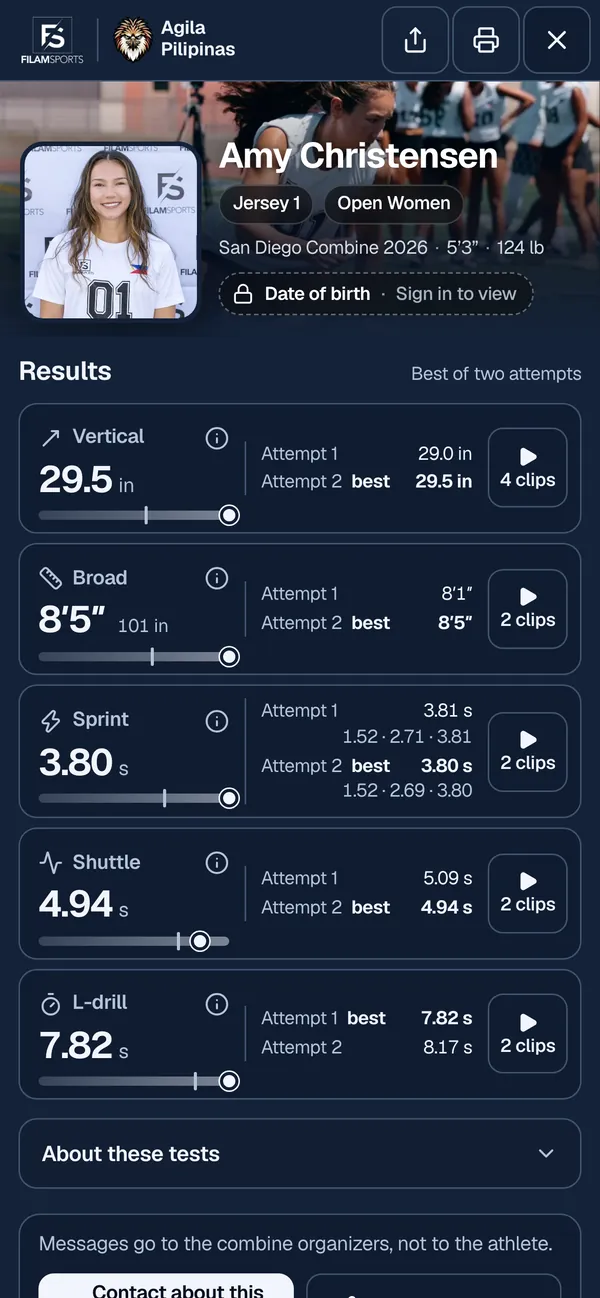
03 · Profile, results first 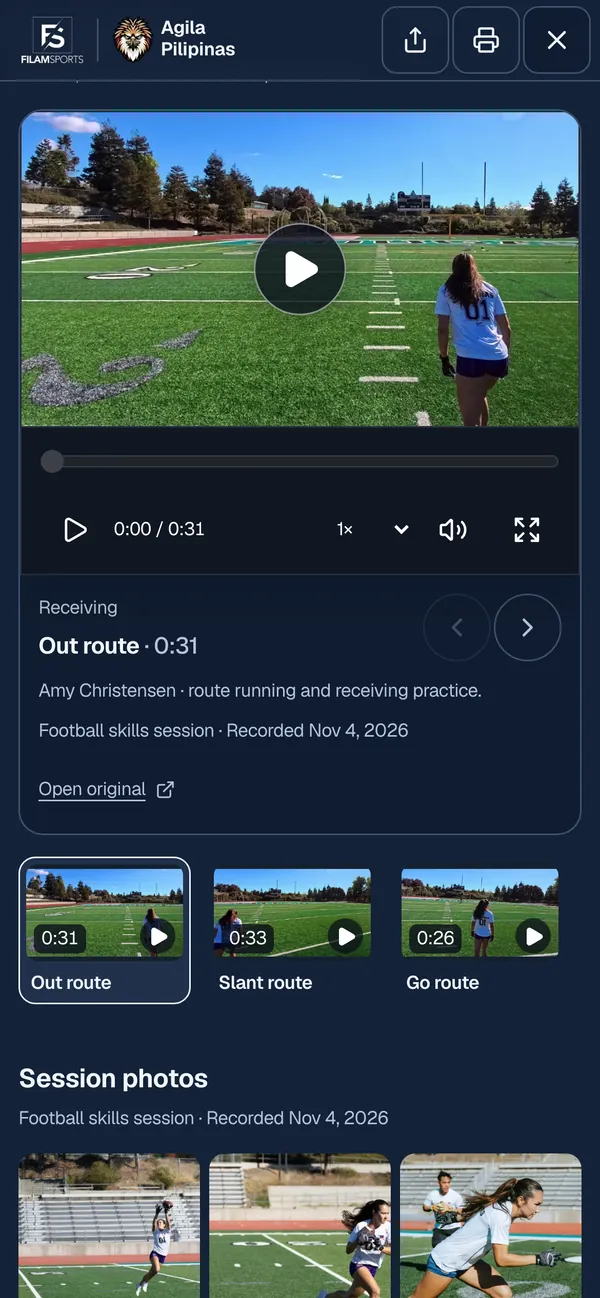
04 · Skills clips & photos 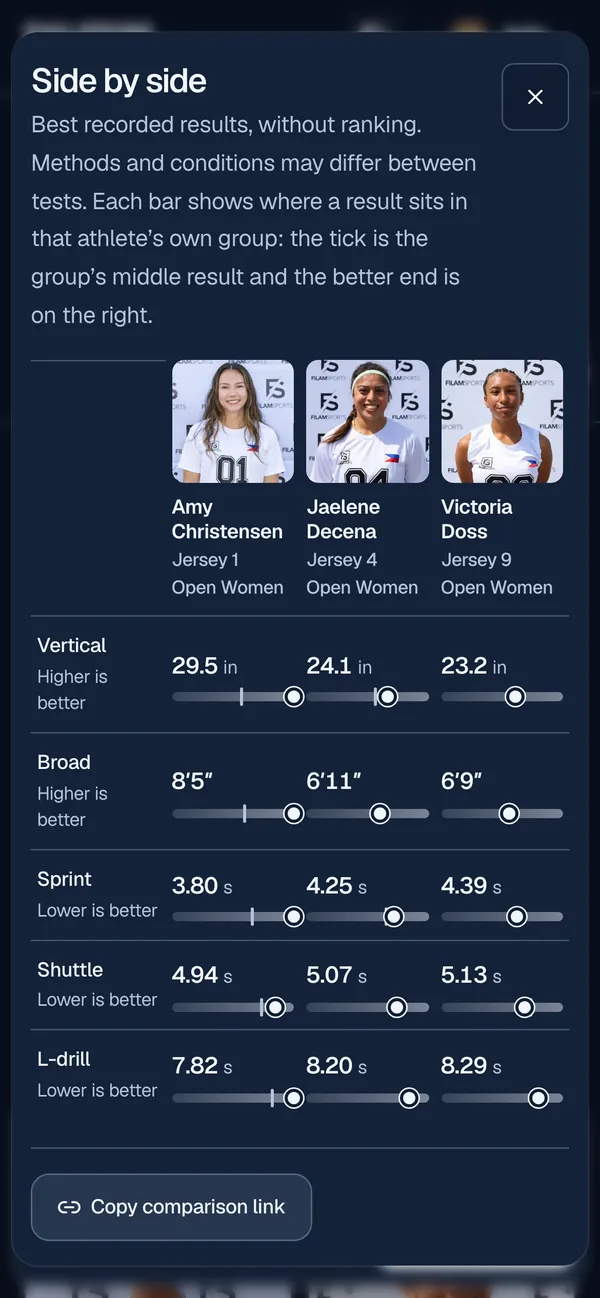
05 · Compare on a phone
Links that look right in a group chat
Every athlete gets a clean /athletes/<id>/<slug> link and a generated 1200×630 card for iMessage and WhatsApp, while robots rules and X-Robots-Tag keep search engines out.

URL-first state
Search, group, city, sort, view and up to three compared athletes all live in the query string. Back and Forward just work.
Uniform locked privacy
Profiles are public with zero login friction. Dates of birth stay behind view-only coach accounts, and every profile renders the same locked row, so the page never reveals whether a date is on file.
Safari-safe playback
502 station clips and the skills sessions stream through a 206 byte-range proxy with 1080p/720p derivatives, attempt matching and frame-accurate posters.
04Systems architecture · Field safety
Two apps, one safety boundary.
Staff entering numbers on a hot sideline make typos. Instead of writing straight to production, PH Combine Field captures into an isolated buffer until every mark has been reviewed.
- 01ph-combine-field
Phones on the field
Station-locked jersey keypad, athlete photo confirmation, auto-advancing 10/20/30 splits, Sunlight mode, and a durable on-device queue with idempotent client keys.
- 02Field buffer
Isolated buffer database
Append-only Neon Postgres enforced by triggers. Corrections supersede earlier rows; removals void without erasing history. Rosters are read through a least-privilege role.
- 03Review
Staff review & fingerprint lock
Outliers, feet-vs-inches slips and duplicate attempts surface for review without blocking capture. Approvals bind to the live production fingerprint, so stale reviews are rejected.
- 04phcombine.com
Dry-run, then merge
An operator previews, then applies approved rows in one locked Postgres transaction, writing the same audit records as the admin app and keeping each event’s history.
PH Combine Field · Synthetic test athletes
Big keys, loud confirmations.
One station per phone, a jersey keypad with 44–56px keys, a confirmation sheet before every save, and a Sunlight mode for glare. Corrections and removals never erase what came before.
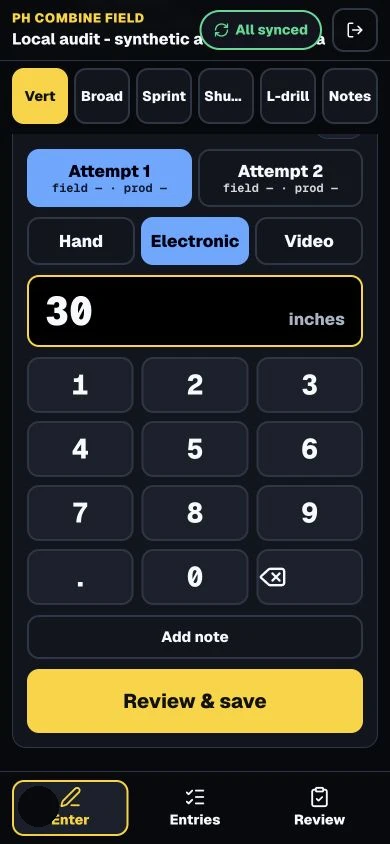
01 · Station keypad 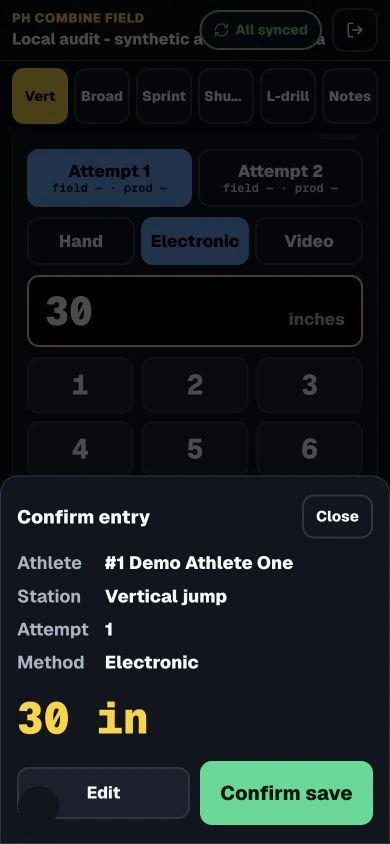
02 · Confirm before save 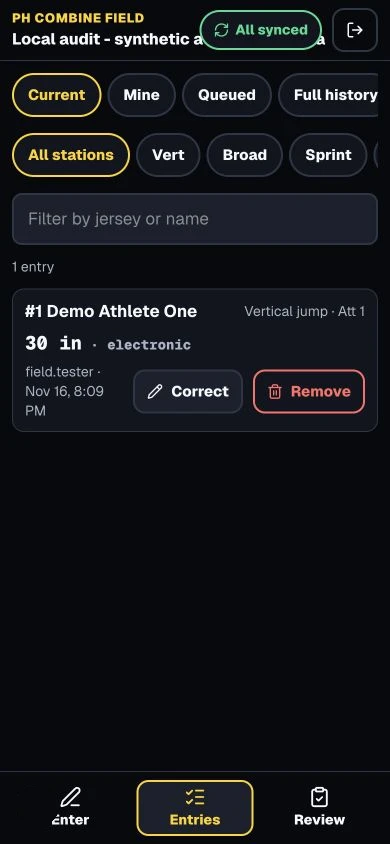
03 · Entries & queue 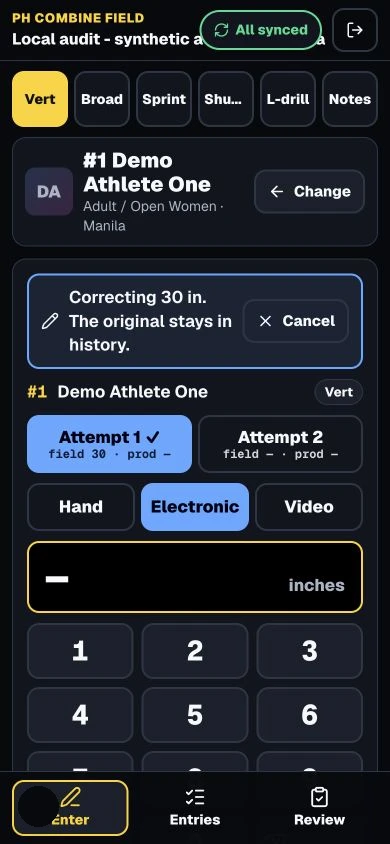
04 · Corrections keep history 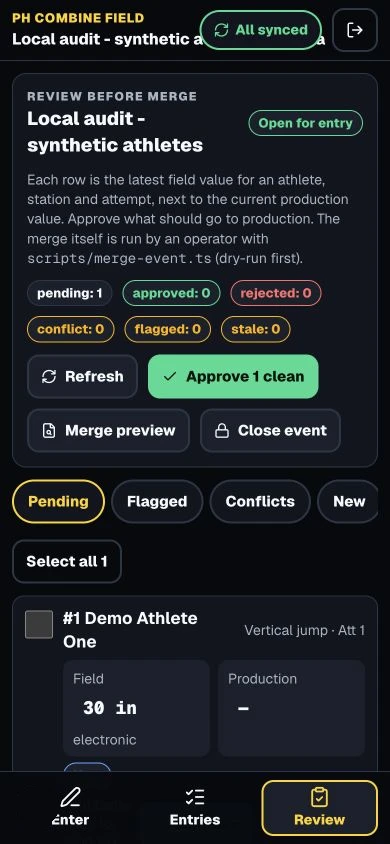
05 · Review before merge 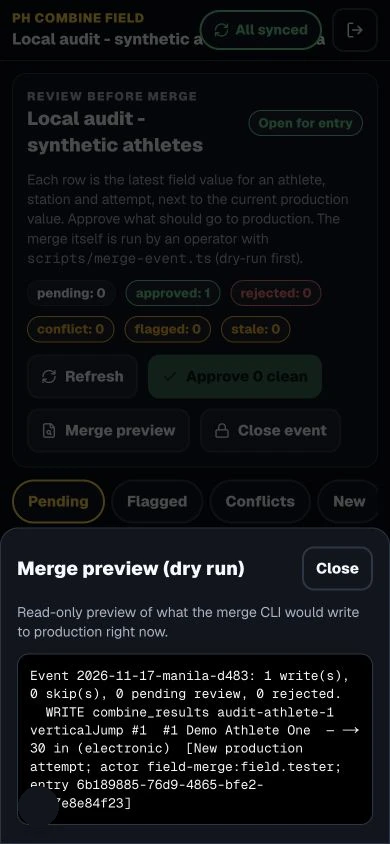
06 · Dry-run merge preview
Offline & sunlight resilience
Every submission is written to an on-device queue with a unique client_key before it touches the network, so dead zones and automatic retries never duplicate a row.
Event-scoped history
A merge locks production tables in one transaction, refuses reviews made against data that has since changed, and keeps each event’s earlier marks in staff Activity instead of overwriting them.
05Engineering & QA
Built to hold up on game day.
- Frontend & UI
- Next.js 16 (App Router), React 19, TypeScript, Tailwind CSS 4, Radix UI / shadcn/ui, and a permanent dark-navy athlete card system.
- Databases & media
- Two isolated Neon serverless Postgres databases (public and field buffer) bridged by a read-only role, plus Vercel Blob for photos, video derivatives and posters.
- Auth & integrity
- Named admin and view-only coach accounts with salted scrypt hashes, signed 8-hour HttpOnly sessions, self-service recovery, optimistic 409 conflict checks and atomic audit logs.
- Verification
- An in-process PGlite Postgres harness running 264+ automated unit and integration tests across auth, offline queues, race conditions, Safari video playback and merge parity.
06Trajectory · 2026 — 2028
San Diego and what’s next.
San Diego proved the model with real athletes and real video. Next: more combine stops across California and in the Philippines, on the same verified data architecture.
- Results live
San Diego
Grossmont High School
66 athletes · 5 stations · 502 clips
- Upcoming
Los Angeles
Southern California
Next California combine stop
- Upcoming
San Jose
Northern California
Bay Area combine and skills sessions
- Upcoming
Manila
Philippines
In-country combine expansion
For Philippine sport
Competing for Team Philippines in the pole vault taught me how much reliable infrastructure matters to athletes trying to be seen. PH Combine is the software side of that commitment.